Imagine looking up at the night sky and seeing thousands of twinkling stars.
Each of those tiny points of light has a story to tell, a journey from birth to death that can span millions to billions of years.
The life cycle of a star is one of the most fascinating processes in the universe. From clouds of gas and dust in space, stars are born, shine for billions of years, and eventually reach the end of their life. This process is known as stellar evolution.
The Birth of a Star
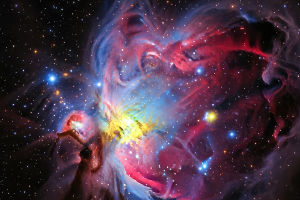
Stars begin their existence in large clouds of gas and dust called nebulae, found throughout space. These clouds are primarily made of hydrogen, the most abundant element in the universe. Under the force of gravity, the material slowly collapses and forms a dense, hot core.
As pressure and temperature increase in the core, nuclear fusion eventually begins. During fusion, hydrogen atoms combine to form helium, releasing enormous amounts of energy in the form of light and heat. This outward energy balances the inward pull of gravity, allowing the star to become stable and shine.
Our Sun is an example of a middle-aged star that has been in this stable phase for about 4.6 billion years.
The Life of a Star
Once nuclear fusion begins, a star enters the longest and most stable stage of its existence. It continues producing energy by converting hydrogen into helium in its core.
The duration of this phase depends on the star’s mass. Massive stars burn through their fuel rapidly and may exist for only a few million years, while smaller stars can remain stable for tens of billions of years.
As hydrogen in the core becomes depleted, the core contracts and heats up while the outer layers expand. This transition marks the beginning of the star’s final stages of evolution.
In the case of the Sun, it is expected to expand into a red giant in about five billion years, growing large enough to engulf the inner planets of the solar system.
The Death of a Star
The final stage of a star’s life depends on its mass. Smaller stars, such as the Sun, end their lives in a relatively gentle way. After expanding into a red giant, they shed their outer layers into space, creating glowing clouds of gas. The remaining core becomes a white dwarf, which slowly cools over time.
Massive stars, however, end their lives in a much more violent event. When they exhaust their nuclear fuel, their cores collapse under gravity, triggering a powerful explosion known as a supernova. This explosion can briefly outshine an entire galaxy.
Depending on the remaining mass, the collapsed core may become a neutron star or, if massive enough, form a black hole, where gravity is so strong that not even light can escape.
Stellar Remnants
The remnants left behind after a star dies play a vital role in the universe. White dwarfs, neutron stars, and black holes represent the final stages of stellar evolution, but they also contribute to the creation of new stars and planetary systems.
When a supernova occurs, it releases heavy elements such as carbon, oxygen, and iron into space. These elements mix with surrounding gas and dust, eventually forming new nebulae. Over time, this recycled material can give birth to new stars and planets.
The formation of Earth and the rest of the solar system was made possible by elements produced in earlier generations of stars.
The Cycle Continues
The birth, life, and death of stars form a continuous cycle that shapes the structure of the universe. Each generation of stars contributes to the creation of new stars, planets, and the building blocks of matter.
By studying stellar evolution, we gain a deeper understanding of how the universe changes over time and how everything around us is connected. Stars are not only distant objects in space but also the origin of the elements that make up planets and life itself.