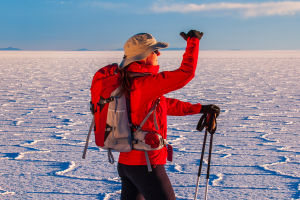
Training above 2,000 meters can trigger measurable physiological adaptations that may improve endurance performance. Here is why elite athletes go high to race faster.
The 1968 Olympic Games in Mexico City changed how sports scientists thought about altitude. Held at approximately 2,240 meters above sea level, the Games produced a striking pattern: endurance events saw dramatically slower-than-record finishes, while sprint and power events broke records across the board.
The thin air that punished distance runners actually helped sprinters, reducing air resistance without meaningfully affecting anaerobic metabolism. Researchers spent the following years figuring out exactly what was happening — and how to use those effects to an athlete's advantage.
What Altitude Does to the Body
At sea level, air contains roughly 20.9% oxygen. At altitude, that percentage stays the same, but barometric pressure drops, reducing the partial pressure of oxygen — the effective concentration that the lungs can deliver to the bloodstream. The body detects this oxygen scarcity through specialized sensors and responds with a cascade of adaptations designed to maximize oxygen delivery despite lower oxygen availability.
The primary adaptation is an increase in erythropoietin (EPO), a hormone produced by the kidneys that stimulates red blood cell production. More red blood cells mean more hemoglobin — the protein that carries oxygen. A higher hemoglobin mass means more oxygen can be transported to working muscles per unit of blood pumped by the heart.
Additionally, altitude exposure triggers adaptations in the muscles themselves, including changes associated with improved oxygen utilization, increased capillary density, and, in some cases, improvements in the enzymes responsible for aerobic metabolism. VO2 max — the maximum volume of oxygen an athlete can use per minute — typically drops by around 6–8% for every 1,000 meters above sea level during initial exposure, then partially recovers as acclimatization proceeds over several weeks.
Live High, Train Low: The Key Innovation
The fundamental tension in altitude training is this: the altitude that stimulates the best physiological adaptations is also the altitude at which it is hardest to train at high intensity. At 3,000 meters, an athlete simply cannot run as fast or push as hard as at sea level. If the goal is to build aerobic fitness, reduced training intensity can limit training quality.
The live high, train low (LHTL) principle resolves this. Athletes live and sleep at altitude — typically 2,100 to 2,500 meters — where the hypoxic stimulus continuously drives EPO production and red blood cell development. But they descend to lower altitude (below 1,200 meters) for training sessions, where they can maintain the intensity and speed needed for competitive fitness.
Research has shown that this approach can improve hemoglobin mass and endurance performance when sufficient altitude exposure is accumulated. The optimal hypoxic dose for LHTL interventions, based on accumulated evidence, falls in the range of several hundred hours of altitude exposure over three or more weeks. Interventions shorter than three weeks generally produce smaller or less consistent results.
Good venues for LHTL include Mammoth Lakes in California (2,400 meters), Flagstaff in Arizona (2,100 meters), and the Sierra Nevada near Granada in Spain — all with access to lower-altitude training roads and tracks nearby.
What the Evidence Actually Shows
A 2025 systematic review and meta-analysis examining 13 randomized controlled trials found that altitude training significantly increased hemoglobin levels and hemoglobin mass compared with low-altitude training. Time-trial performance also improved. However, the effect on VO2 max was less consistent across studies, suggesting that many benefits may operate through improved oxygen-carrying capacity rather than large increases in peak oxygen uptake.
A separate meta-analysis found that increases in hemoglobin mass can remain detectable for up to approximately 20 days after returning to sea level, although responses vary among athletes.
As a result, elite endurance runners and cyclists often schedule altitude camps to end two to three weeks before major competitions.
The Limits and the Critics
Altitude training is not without legitimate criticism. Opponents point out that red blood cell concentration gradually returns toward normal after returning to sea level, narrowing the competitive window. Training at altitude is harder to perform at high intensity, which means some athletes may sacrifice training quality during the altitude phase.
Altitude sickness is also a real risk, particularly above 3,000 meters, causing nausea, headaches, and sleep disruption that can compromise training quality.
At extreme altitudes above 5,000 meters (16,000 feet), skeletal muscle tissue can deteriorate. Extended exposure at these elevations has been associated with measurable losses in muscle volume. This is well above the range typically used for athletic training camps, but it illustrates that more altitude is not always better.
Anaerobic athletes — sprinters, throwers, and weightlifters — generally do not benefit from altitude training in the same way endurance athletes do because their performance relies less on sustained oxygen delivery. The sprint records set in Mexico City reflected reduced air resistance rather than altitude-induced physiological adaptation.
Simulated Altitude: Bringing the Mountain Inside
Altitude-simulation tents and rooms have made hypoxic exposure accessible without requiring travel to mountainous regions. By reducing the oxygen concentration of the air while maintaining normal atmospheric pressure, athletes can sleep in hypoxic conditions at home and train at sea level during the day — effectively replicating the LHTL model.
Research indicates that simulated altitude and natural altitude can produce similar hematological adaptations when the overall hypoxic dose is comparable.
This approach allows athletes to schedule altitude exposure more precisely around competitions and reduces many of the logistical challenges associated with training camps. The physiology remains largely the same. The mountain itself is no longer essential.
Altitude training remains one of the most studied methods for improving endurance performance. While it is not a shortcut to success and does not benefit every athlete equally, properly structured altitude exposure can enhance oxygen-carrying capacity and support competitive performance. Modern approaches such as live high, train low and simulated hypoxic environments have made these adaptations more accessible, allowing athletes to use altitude strategically rather than relying solely on geography.