Radio astronomy opens a window to parts of the universe invisible to the human eye.
While optical telescopes rely on reflected sunlight, radio arrays detect faint electromagnetic waves emitted by stars, galaxies, pulsars, and interstellar gas clouds.
These arrays help scientists study phenomena from star formation to black hole activity, providing information that optical observation alone cannot reveal.
How Radio Arrays Operate
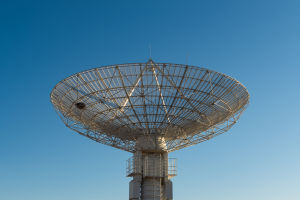
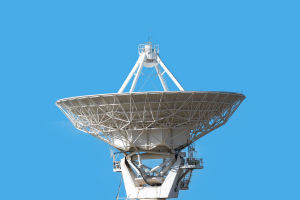
A radio array consists of numerous antennas spread over large distances, sometimes several kilometers apart.
Interferometry: Each antenna collects radio waves, which are combined to simulate a single telescope with a diameter equal to the array's span. This technique greatly increases resolution, allowing astronomers to distinguish minute details in distant galaxies.
Signal Amplification: Radio waves reaching Earth are incredibly weak. Sensitive receivers amplify these signals while minimizing noise from the environment, including human-made radio interference.
Precise Timing: Arrays rely on atomic clocks or GPS-based timing to synchronize signals from each antenna. Even microsecond discrepancies can blur the resulting images.
Scientific Discoveries
Pulsars: Radio arrays have discovered thousands of pulsars—rapidly spinning neutron stars emitting beams of radio waves. Studying these pulsars provides insight into extreme matter and tests theories of gravity.
Galactic Structure: Arrays map neutral hydrogen gas, revealing spiral arms and regions where stars are forming. This has transformed our understanding of galaxy evolution.
Black Hole Jets: Observations capture radio emissions from matter being accelerated near black holes. This data helps scientists understand jet formation and energy release processes in extreme environments.
Cosmic Microwave Background: Some arrays detect faint radiation left over from the cosmic origin, giving clues about the universe's earliest moments and the formation of large-scale structures.
Technological Innovations
Radio arrays combine cutting-edge electronics, computing, and signal processing.
Digital Correlation: Signals from multiple antennas are digitally combined and analyzed to produce highly detailed images. Advanced algorithms filter out noise caused by the Earth's atmosphere or interference.
Adaptive Calibration: Real-time calibration adjusts for changes in antenna positions, temperature fluctuations, and environmental effects to maintain image clarity.
Data Handling: Modern arrays generate terabytes of data daily. Supercomputers store, process, and reconstruct these signals, allowing astronomers to interpret complex cosmic patterns.
Applications Beyond Astronomy
Radio arrays also influence other scientific and technological fields.
Telecommunications: Techniques developed for precise signal timing and noise reduction enhance wireless communication systems.
Space Exploration: Studying radio waves from distant objects informs spacecraft navigation and planetary observations.
Research Training: Students and researchers develop expertise in physics, engineering, and computational science by working with arrays.
Reflections on Cosmic Observation
Standing before an array, one can feel humanity's curiosity and ingenuity.
Transforming faint radio signals into vivid maps of the cosmos reveals structures and events billions of light-years away. Each discovery—from pulsars to galactic hydrogen maps—demonstrates how careful observation and advanced technology expand our understanding of the universe.
Radio arrays are a testament to the power of science, inspiring wonder, posing new questions, and continually pushing the limits of what we can observe.