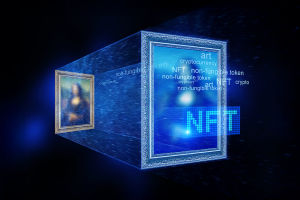
In recent years, digital art has emerged from the confines of niche online communities to the forefront of the global art market.
One of the driving forces behind this shift is the rise of Non-Fungible Tokens (NFTs), a revolutionary technology that allows artists and collectors to buy, sell, and trade digital artworks in a way that ensures authenticity and ownership.
While the concept of digital ownership had always been a challenge—due to the ease of replication in digital formats—NFTs have provided a solution. These tokens, built on blockchain technology, have transformed the digital art world, creating new opportunities for both creators and buyers alike. In this article, we will explore the rise of NFTs, their role in the art market, and what they mean for the future of digital art collecting.
What Are NFTs? A Brief Overview
To understand how NFTs are shaping the art world, it's important to first grasp what they are and how they function. A Non-Fungible Token (NFT) is a unique digital asset stored on a blockchain, a decentralized and immutable ledger.
Unlike cryptocurrencies such as Bitcoin, which are fungible and can be exchanged for identical units, NFTs are "non-fungible," meaning each token is distinct and cannot be replaced by another. This uniqueness is what makes NFTs ideal for representing digital art, as they serve as a proof of ownership and provenance, even in the digital space.
When an artist creates a digital artwork and mints it as an NFT, the resulting token is linked to that piece, creating a direct connection between the artwork and its owner. This process ensures that the buyer has a verifiable claim to the piece, even if the image itself can be copied or shared across the internet. Essentially, the NFT certifies the authenticity and rarity of the artwork in the same way that a certificate of authenticity would for a traditional painting.
As the Los Angeles Times explains,
“The NFT file doesn’t contain the digital piece of art, or the video clip, or the Shatner card itself. It’s just a kind of contract, saying ‘the owner of this NFT owns this other digital file,’ often with a link to the art file itself.”
The Impact of NFTs on Digital Art Creation
NFTs have opened up a world of opportunities for digital artists, enabling them to monetize their work in ways that were previously unimaginable. Before the rise of NFTs, digital artists often struggled to sell their works, as the ease of reproduction made it difficult to create scarcity—a key component of art sales.
With NFTs, scarcity is no longer an issue; artists can sell their works with confidence, knowing that their digital pieces are unique and traceable.
• Ownership and Royalty Systems: One of the most significant benefits of NFTs for artists is the ability to set up automatic royalty payments. With each subsequent sale of an NFT, the artist can receive a percentage of the transaction, ensuring that they continue to benefit from the increasing value of their work.
This feature creates a direct, ongoing relationship between the artist and their collectors, allowing artists to participate in the secondary market without losing control over their creations.
• Democratization of Art: NFTs have also democratized the art market, allowing artists from all over the world, regardless of their geographic location or financial resources, to sell their work directly to collectors. This has helped diversify the art world, providing exposure to creators who may have otherwise gone unnoticed in traditional galleries and auction houses.
The Role of NFTs in the Art Market
NFTs have made a significant impact on the traditional art market by offering new ways for collectors to engage with art. The rise of NFT platforms such as OpenSea, Rarible, and Foundation has created a thriving marketplace for digital art, where buyers can browse and purchase works with ease.
However, the integration of NFTs into the art world has not been without controversy and challenges.
• New Forms of Collecting: NFT art collecting differs from traditional art collecting in several key ways. While physical artworks are often displayed in private collections or public galleries, NFT artworks are typically stored in digital wallets, which can be accessed by the owner at any time.
This digital nature of NFT collecting has raised questions about the permanence of digital ownership—what happens when the platform hosting the NFT disappears or when the digital wallet is compromised?
• Value and Speculation: The value of NFTs is often determined by factors such as the artist's reputation, the uniqueness of the piece, and the rarity of the underlying asset. However, because NFTs are still a relatively new market, their value is also subject to speculation and volatility.
High-profile sales, such as the $69 million auction of Beeple's digital collage Everydays: The First 5000 Days, have drawn both excitement and skepticism, with some wondering whether NFTs represent a genuine shift in the art world or a speculative bubble waiting to burst.
The Future of NFTs and Digital Art Collecting
As the NFT market continues to grow, the future of digital art collecting is full of possibilities. The intersection of blockchain technology and the art world has already begun to redefine how art is created, owned, and sold.
However, there are still many unanswered questions about the long-term sustainability of NFTs and their impact on the broader art market.
• Environmental Impact: One of the most significant criticisms of NFTs is their environmental impact. The blockchain networks used to mint NFTs, such as Ethereum, require significant amounts of energy to operate, leading to concerns about the carbon footprint of the NFT market.
However, solutions are already in the works, with efforts to develop more energy-efficient blockchain systems, such as Ethereum 2.0, which aims to reduce the network's energy consumption.
• Integration with Virtual Reality and the Metaverse: The rise of NFTs is closely tied to the development of virtual worlds and the metaverse, digital spaces where users can interact, socialize, and buy virtual goods, including digital art. As virtual reality technology advances, NFTs may become the standard for ownership in these virtual environments, further embedding digital art into our daily lives.
The possibility of owning and displaying NFT art in virtual galleries or even using it as virtual décor in the metaverse could usher in a new age of art consumption.
Conclusion: NFTs as the Future of Art Ownership
NFTs are undoubtedly transforming the world of digital art, offering artists new avenues for creation and monetization, while also allowing collectors to engage with and invest in unique, authentic digital works. While the NFT market is still in its infancy, the possibilities for digital art ownership are vast and ever-expanding.
As technology continues to evolve and the art world adapts, NFTs have the potential to redefine not just how we collect art, but how we experience and interact with it in the digital age.